

Grief, Flour, and the Quiet Rituals That Hold Us Together
By: Courtney Fuciarelli, MSW, RSW, a registered therapist and founder of a community-based wellness practice in Ontario, Canada. Her practice focuses on integrating mental health care, creating community spaces for healing, and using embodied approaches to wellbeing through baking and nature based environments. Her work explores how creative and sensory practices can support people through grief, anxiety, and life transitions- and how this support can be sustained through social enterprise and creative funding pathways.
Learn More:
Learn more about Courtney’s work at www.fieldsandflourtherapy.ca (therapy practice), and www.wildflourfields.com (community social enterprise).
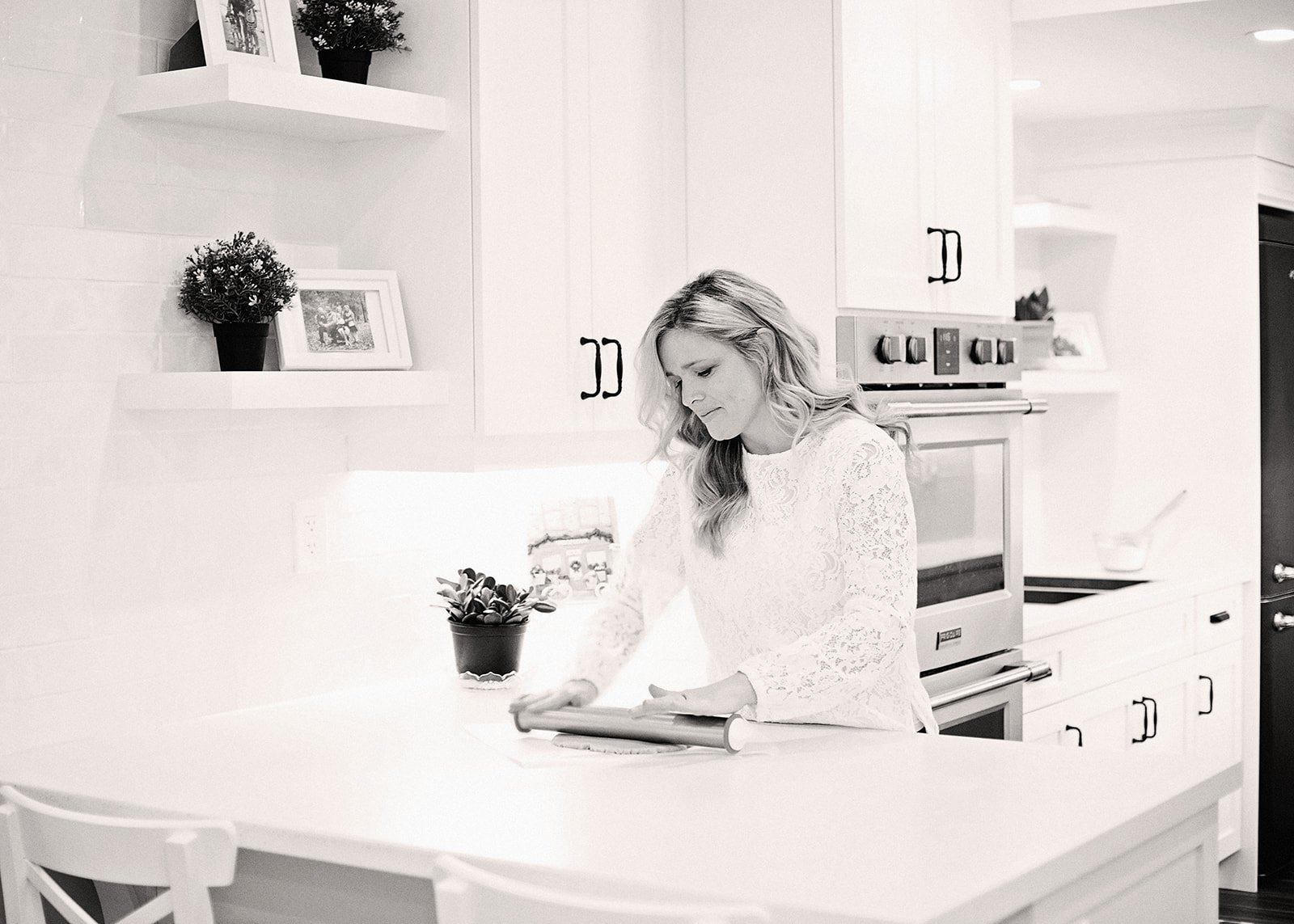
I’ve always felt comfortable in the kitchen.
I can’t fully explain why, but it’s the place I naturally gravitate toward when I’m visiting family or friends, or simply at home with my own family.
I certainly don’t want to assume everyone feels that way, but there is a reason the kitchen is often considered the heart of the home.
Looking back, I realize I shouldn’t have been surprised that, in moments of grief, the kitchen is where I remember gathering. It’s where people arrived after the phone call. Where we sat together trying to make sense of the news that someone we loved was gone.
Did we gather there because of habit? Or because of comfort?
Grief Lives in the Kitchen Already
Grief Lives in the Kitchen Already As a therapist who spends most of my days counselling individuals with a range of concerns, I’ve learned that some challenges are easier to navigate in the therapy room than others.
For example, anxiety often responds well to a combination of graduated exposure, cognitive reframing, and relaxation strategies. In other words, there are tangible steps we can take. The work is rarely easy, but there is often a roadmap that allows us to move forward, one step at a time. Grief is different.
It rarely presents itself in a way that can be neatly named or managed. It moves in waves—sometimes sharp and consuming, other times quiet and strangely absent. Over the years, I’ve heard clients describe grief not only as emotional pain, but as profound disorientation: What am I supposed to do now? How do I keep going?
While grief is deeply psychological, it is also profoundly embodied. It lives in the nervous system—in disrupted routines, altered sleep, forgotten meals, and the unfamiliarity of everyday life after loss. Healing, then, often begins not only through talking, but through doing: through small, repetitive, sensory rituals that gently anchor us back to the present moment.
One seemingly simple yet remarkably powerful form of grounding that I’ve witnessed—both personally and professionally—is baking, in the kitchen.
The Nervous System and Our Need for Rhythm
Grief destabilizes nearly every aspect of a person’s life. Time feels distorted. Ordinary routines disappear.
The nervous system, overwhelmed by loss, often longs for predictability.
Baking offers exactly that.
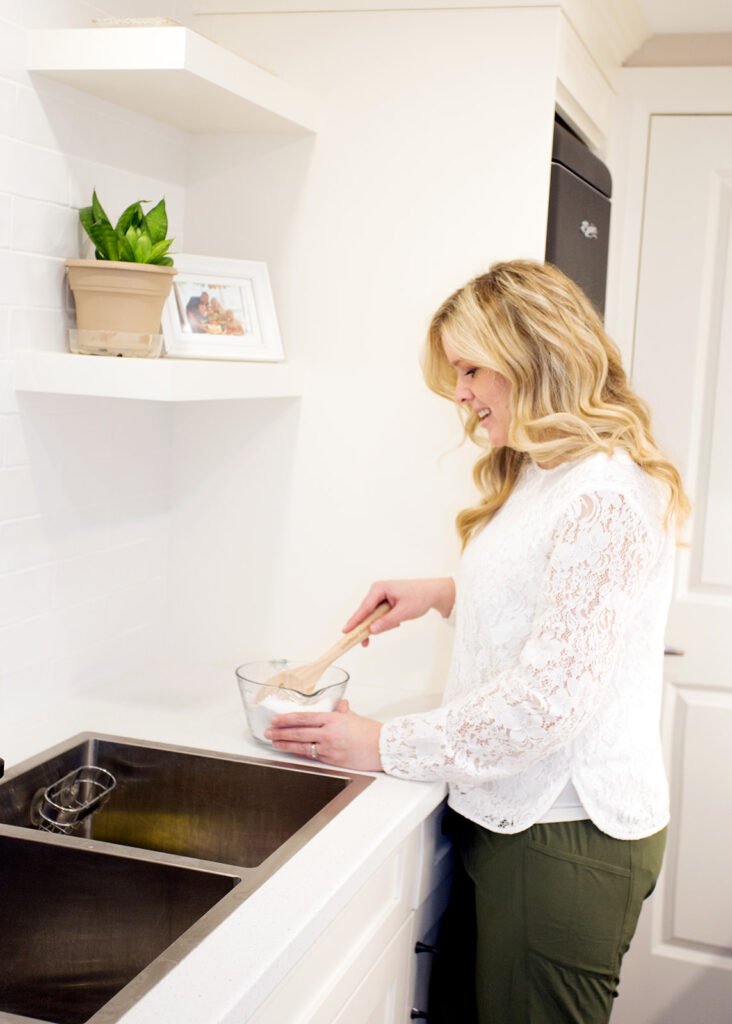
There is a beginning, a middle, and an end. There are steps to follow, ingredients to measure, and a sequence that unfolds in a reliable way. There is the weight of flour in your hands, the scent of vanilla, the rhythm of stirring, and the quiet anticipation of something rising in the oven.
From a therapeutic perspective, this kind of structured sensory engagement can support nervous system regulation. It is not about distracting ourselves from grief or avoiding difficult emotions. Rather, it creates a stable container in which grief can exist. It gently reminds the body, You only have to do this next step.
Sometimes that is enough.
When Words Are Not Enough
One of grief’s greatest challenges is that language often feels inadequate.
People rarely know what to say to someone who is grieving. Equally, the grieving person often doesn’t know how to explain what they’re experiencing. Some losses simply resist language, especially in the early days when reality itself feels impossible to comprehend.
In those moments, asking someone to “talk about it” can feel overwhelming.
This is where non-verbal forms of expression become especially meaningful—and where the environment itself begins to matter.
Baking asks very little of us emotionally. It does not require explanation or emotional translation. It simply allows grief to exist alongside the task at hand.
A person can knead dough while crying.
They can measure flour while feeling completely numb.
They can stir batter while holding memories they aren’t yet ready to speak aloud.
Within the familiar warmth of a kitchen, grief doesn’t need to be hidden or resolved. It can simply be present.
In this way, the kitchen becomes a quiet witness—holding space without demanding anything in return.
The Sensory Language of Comfort
Much of grief work involves helping people move through each day feeling just supported enough to continue. It also involves helping them make sense of a loss that has forever altered their story.
But when grief narrows a person’s world and words become difficult to find, sensory experiences can gently widen it again.
Baking may be one of the richest sensory experiences in everyday life:
- The grounding weight of dough in your hands.
- The rhythmic motion of stirring or folding.
- The warmth that escapes when the oven door opens.
- The familiar scent of baked goods filling a room.
These experiences are not incidental. They communicate safety to the nervous system. They orient us to the present moment when our minds are pulled toward absence, memory, or longing.
Perhaps most importantly, grief work is never about fixing grief.
It is about making space for it.
It is about allowing every emotion to exist while offering the body something steady and reliable to return to.
When Words Are Not Enough
Grief fractures our sense of continuity. The life we knew before loss and the life we inhabit afterward can feel like two entirely different worlds.
Rituals—especially quiet, repeated ones—help bridge that divide.
Baking can become one such ritual. Not because it erases loss, but because it introduces continuity where everything else feels interrupted. The act of creating something from beginning to end, then sharing it—or simply witnessing it come into being—offers a gentle reminder:
I am still here.
Life is still moving.
Something can still be made.
For some, baking becomes a way of staying connected—to a loved one, to cherished memories, or even to parts of themselves that feel temporarily out of reach.
There is a reason we instinctively bring casseroles, meals, or baked goods to those who are grieving. Food offers more than nourishment. It is tangible care. It is comfort made visible.
The act of giving nourishes the recipient, but it also provides the giver with a meaningful way to express compassion when words feel inadequate.
In much the same way, baking can become a deeply personal expression of the complicated emotions that accompany grief.
Not a Solution, but a Companion
It is important to say that baking is not, in itself, therapy. Nor is it a replacement for professional support when grief becomes overwhelming or complicated.
Grief is complex, and healing often requires many forms of care.
But what I’ve come to appreciate, both in clinical practice and in witnessing the resilience of the people I work with, is that healing rarely happens in one transformative moment.
It happens in small, accumulated moments of regulation, connection, and meaning.
Sometimes those moments happen in a therapy room.
And sometimes they happen with flour on the counter, a mixing bowl in hand, and the quiet comfort of following one simple step after another when everything else feels uncertain.
Grief changes the texture of everyday life. It alters our relationship with time, attention, and meaning.
Yet within that altered landscape, small rituals can offer something surprisingly steady.
I know baking alone will never resolve grief.
But it can sit beside it.
It can give the body something to do when words fall short.
It can offer rhythm when life feels fractured.
And it can remind us, gently and without pressure, that creation remains possible—even in the midst of profound loss.






Leave a comment